Who Sees the AI Safety Audit When the Only Recipient Is the Vendor’s Board?

On 29 September 2026, six of the world’s largest artificial intelligence developers signed a one-page pledge at the White House. The document commits them to internal controls, an internal oversight team, an independent external auditor and a board committee. It carries no penalty, creates no public register, and requires no report to any authority outside […]
Fujitsu Sells Provenance as Sovereignty: Can a Board Verify What It Cannot Trace?

A made-in-Japan AI server went on global sale this month, and the pitch is not speed. Fujitsu’s MONAKA Server is designed, developed and manufactured at its Kasashima plant, sold with a trackable component history, shipped first to Japan and European buyers including defence customers. The offer is provenance itself: hardware whose origin, custody and audit […]
Who Holds the Record When AI Data Centre Deals Are Signed in Secret?

Confidentiality agreements signed by local officials are determining AI infrastructure before the public is told. Virginia and Pennsylvania have moved to ban the practice, and Congress now has a bill. The sovereignty question is who holds the record.
New York City Will Not Take an AI Vendor’s Word: Who Holds the Power of Proof?

New York City’s AI validation bills move the burden of proof from vendor assertion to independent evidence. The deployer holds the penalty, not the evidence.
Africa’s AI Ambition Rests on Infrastructure It Does Not Own: Who Holds the Terms?

A landmark AI partnership signed in New York on 22 September 2026 between Kenya and Anthropic arrived in the same week as a harder admission from African leaders: the continent’s AI ambition is still running on infrastructure it does not own. Kenya’s deal commits both sides to co-created skills, safety evaluation and public-sector pilots under […]
Canada Set a Data Centre Standard. The Compute Still Answers Elsewhere.

Canada’s Responsible Data Centre Development Principles set a national baseline for AI infrastructure and 23 firms signed. The compute still answers to foreign legal orders.
Twenty-Two States Call for Frontier AI Control. The Powers That Build It Did Not Sign.

Twenty-two governments have asked the UN to explore an international institution for frontier AI. The states that host the compute did not sign. For institutions deploying these systems, the governance gap is now a procurement problem.
Who Controls AI When the Grid Says No? Texas Just Answered
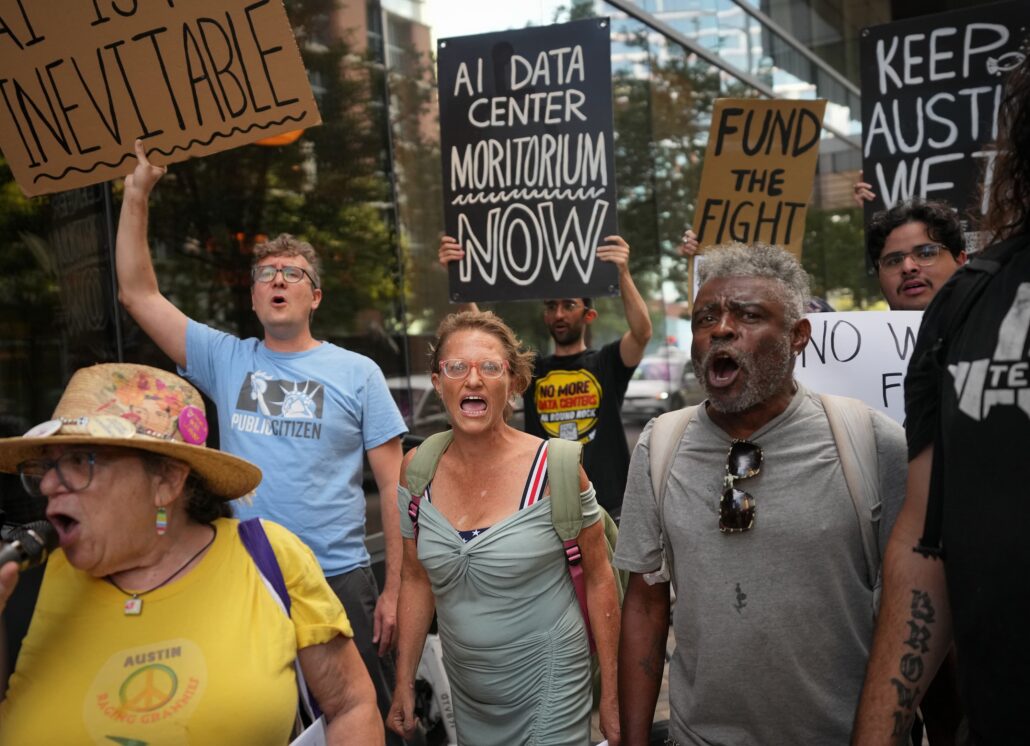
Texas has spent three years courting the artificial intelligence buildout. On 21 September 2026, Governor Greg Abbott ordered the Texas Commission on Environmental Quality to halt every permit sought by a data centre project, extending a moratorium that previously covered only grid connections. The directive freezes approvals until state agencies finish auditing a connection queue […]
Who Sets the Rules When AI Capacity, Evaluation and Language Are All Rented?

Fourteen days of announcements across New Delhi, Cairo, Montreal and Strasbourg show that AI governance is now a contest over evaluation authority, compute capacity and named languages. For boards and public institutions, the practical issue is which dependencies will still be standing when the order settles.
Can a $20 Billion Merger Give Regulated Buyers an AI Stack Outside US Reach?

Cohere and Aleph Alpha have combined to create a vertically integrated enterprise AI stack with no layer under US data access authority. The deal answers a procurement question that has been open for three years — and raises a harder one about institutional capability.